
Yoga is a great way to improve your physical and mental health, by increasing your flexibility, strength, balance, and relaxation. But did you know that you can also practice yoga with a partner? Two-person yoga poses, also known as partner yoga or acro yoga, are a fun and challenging way to enhance your yoga experience, by adding elements of trust, communication, and teamwork.
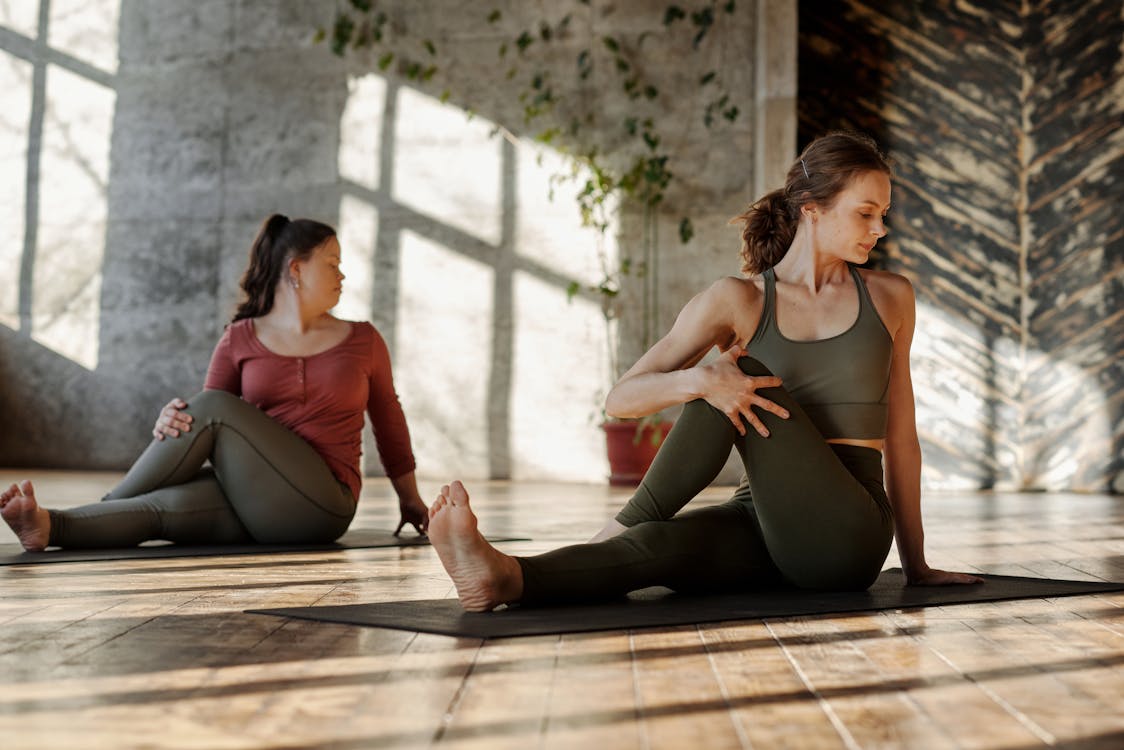
Two-person yoga poses can offer many benefits, such as:
- Strengthening your relationship with your partner, by creating a deeper connection and intimacy.
- Improving your alignment and posture, by providing feedback and support to each other.
- Increasing your challenge and variety, by trying new and different poses that you may not be able to do on your own.
- Boosting your confidence and creativity, by overcoming fears and exploring new possibilities.
But how can you practice two-person yoga poses safely and effectively? Here are some tips and suggestions to help you get started.
Choose the Right Partner
The first step to practicing two-person yoga poses is to choose the right partner. Ideally, you want someone who:
- Has a similar level of experience and ability as you, or is willing to adapt to your level.
- Shares your goals and expectations, or is open to discussing them.
- Respects your boundaries and limits, or are willing to communicate them.
- Trusts you and is trustworthy, or is willing to build trust.
Your partner can be anyone you feel comfortable with, such as a friend, a family member, a romantic partner, or a fellow yogi. You don’t have to be the same size or gender as your partner, as long as you can balance each other’s weight and strength.
Warm Up and Prepare
The second step to practicing two-person yoga poses is to warm up and prepare. Before you start doing any poses, you should:
- Do some solo stretches and exercises to warm up your muscles and joints.
- Find a suitable space to practice, such as a flat, soft, and spacious surface.
- Have some props handy, such as mats, pillows, blankets, or straps, to provide cushioning and support if needed.
- Agree on some signals or cues with your partner, such as words, gestures, or sounds, to communicate when you are ready, comfortable, or need to stop.
Start with Simple Poses
The third step to practicing two-person yoga poses is to start with simple poses. You don’t have to jump into the most advanced or complicated poses right away. Instead, you should:
- Begin with some basic poses that you are familiar with and can do easily on your own, such as standing, seated, or lying down poses.
- Add some variations or modifications to make them more suitable for two people, such as holding hands, touching feet, or leaning back.
- Take turns being the base or the flyer, depending on the pose. The base is the person who supports the weight of the flyer, while the flyer is the person who is lifted or balanced by the base.
Some examples of simple two-person yoga poses are:
- Partner tree pose: Stand next to each other, facing the same direction. Bring one foot up to your inner thigh or calf, and press it firmly against your leg. Hold each other’s hand on the same side as your lifted leg, and reach your other arm up to the sky. Balance and breathe together.
- Partner forward fold: Sit facing each other, with your legs wide apart. Bring the soles of your feet together, and hold each other’s hands or wrists. Gently pull each other forward, as you fold from your hips and lower your chest towards your feet. Relax your head and neck, and breathe deeply.
- Partner boat poses: Sit facing each other, with your knees bent and your feet flat on the floor. Hold each other’s hands or wrists, and lift your feet off the floor, bringing them together. Straighten your legs as much as you can, and lean back slightly, keeping your spine straight and your core engaged. Hold and smile at each other.
Progress to More Complex Poses
The fourth step to practicing two-person yoga poses is to progress to more complex poses. Once you feel comfortable and confident with the simple poses, you can:
- Try some intermediate poses that require more strength, flexibility, balance, and coordination, such as inverted, twisted, or backbend poses.
- Add some transitions or flows between different poses, to create more movement and dynamism.
- Experiment with some advanced poses that challenge your limits and abilities, such as flying, spinning, or stacking poses.
Some examples of complex two-person yoga poses are:
- Partner handstand: Stand facing each other, with one person slightly behind the other. The person in front bends forward and places their hands on the floor, shoulder-width apart. The person behind places their hands on the hips of the person in front, and lifts their legs up over their head, placing their feet on the shoulders of the person in front. The person in front straightens their arms and legs and balances the weight of the person behind. The person behind also straightens their arms and legs and forms a straight line with their body.
- Partner twist: Sit back to back with your partner, with your legs crossed or extended in front of you. Reach your right arm up to the sky, and twist to your left, bringing your right hand to your partner’s left knee. At the same time, your partner reaches their left arm up to the sky, and twists to their right, bringing their left hand to your right knee. Gently pull each other deeper into the twist, as you look over your opposite shoulder. Breathe and switch sides.
- Partner wheel pose: Lie down on your back with your partner, with your heads facing opposite directions and your feet touching each other’s hands. Bend your knees and bring your feet close to your hips, and place your hands next to your ears, with your fingers pointing towards your shoulders. Press into your feet and hands, and lift your hips and chest off the floor, arching your back and straightening your arms and legs. Your partner does the same, and you meet in the middle, touching each other’s feet with your hands.
Two-person yoga poses are a great way to spice up your yoga practice, by sharing it with someone else. By following these tips and suggestions, you can have a safe and enjoyable time, while reaping the benefits of yoga for your body and mind. Remember to always respect yourself and your partner, listen to your body, and have fun! Namaste! 🙏.